Quick answer
- Guides are grouped by the problem you are trying to solve: buying, technical, local, content, ecommerce, measurement, migration and recovery.
- Each guide gives a direct answer first, then steps, examples and checks.
- Start with the audit checklist if you are unsure where to begin.
- Every guide links to the relevant service for when you want hands-on support.
How to use this SEO resource library
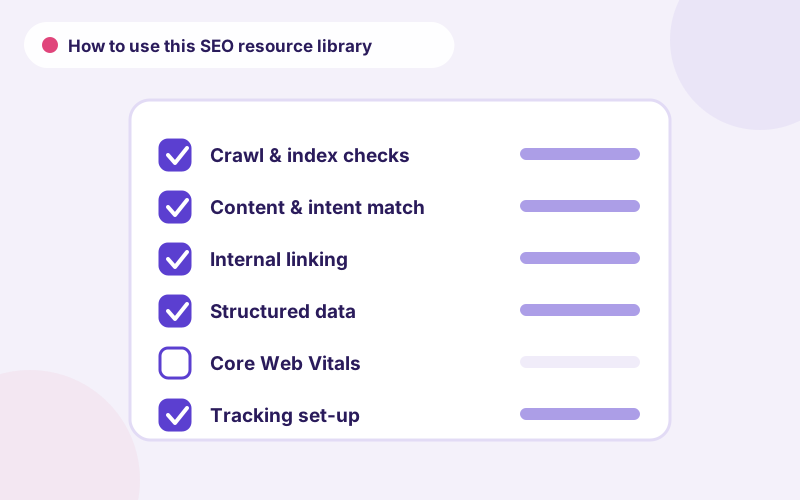
Good SEO advice is specific to the problem. Rather than one long manual, this hub organises short, focused guides by topic, so you can go straight to the answer you need. If you are new to SEO, begin with the buying and basics group. If you already know the problem, jump to the cluster that matches it.
Every guide is written in plain English for business owners and marketers, with checklists and examples you can apply to your own site. Where a task needs specialist help, the guide points to the relevant consultancy service.
Browse all guides by topic
The groups below cover every guide on the site.
Choosing and buying SEO help
How Much Does an SEO Consultant Cost?
How much does an SEO consultant cost in the UK? Compare hourly, project and retainer models, see what drives fees and what to check before you hire.
Read guide →How to Choose an SEO Consultant in London
How to choose an SEO consultant in London: the questions to ask, how to judge audits and case studies, red flags to avoid and what a contract should say.
Read guide →SEO Consultant vs Agency vs In-house Team
SEO consultant vs agency vs in-house team: compare costs, speed, control, skills and accountability, and learn when each delivery model suits your business.
Read guide →How Long Does SEO Take to Show Results?
How long does SEO take to work? Learn which indicators change first, what slows progress and realistic timelines for technical, content and local SEO.
Read guide →Audits and technical SEO
SEO Audit Checklist for Business Websites
A practical SEO audit checklist for business websites covering technical, on-page, content, local and measurement checks, with how to prioritise what you find.
Read guide →Crawling vs Indexing: Diagnose Missing Pages
Crawling vs indexing explained. Learn how Google finds and stores pages, what “crawled currently not indexed” means and how to diagnose pages that are missing.
Read guide →Canonical Tags and Duplicate URLs
Learn how canonical tags work, when to use rel canonical, how they differ from 301 redirects and how to find and fix duplicate URL and canonical mismatches.
Read guide →301 Redirects and Redirect Mapping
A practical guide to 301 redirects for SEO: when to use them, 301 vs 302, how to map old URLs to new ones, avoid chains and keep rankings during changes.
Read guide →Core Web Vitals for Business Websites
What Core Web Vitals are, how LCP, INP and CLS are measured, the pass thresholds and how to improve them on a business website without chasing perfect scores.
Read guide →JavaScript SEO and Rendering Checks
How JavaScript affects SEO and how to test it. Learn rendering checks, common problems and best practices so search engines can see your content and links.
Read guide →Structured Data for Service Business Websites
How to implement schema markup for local business and service sites: the right types, JSON-LD examples, validation steps and what structured data cannot do.
Read guide →Website Architecture and Internal Linking
Build an internal linking strategy and website architecture that helps users and search engines. Learn hubs, anchor text, link audits and structure for SEO.
Read guide →Local SEO
Local SEO Checklist for London Businesses
A local SEO checklist for London businesses covering Google Business Profile, landing pages, citations, reviews, schema and tracking in a clear order.
Read guide →Google Business Profile Optimisation
How to optimise your Google Business Profile: choose categories, add services, set hours, edit information safely and keep the listing accurate.
Read guide →Local Citations and Business Information Consistency
What local citations are, why NAP consistency matters, which directories are worth using and how to find and fix inaccurate or duplicate business listings.
Read guide →Google Reviews and Local SEO
Do Google reviews help SEO? Learn how reviews affect local visibility and conversions, how to ask for them properly and how to respond within Google policy.
Read guide →Service Area Pages for London Businesses
When location pages help SEO and when they create doorway pages. How to build useful London service area pages with unique content and avoid cannibalisation.
Read guide →Content and keywords
Keyword Research and Intent-to-URL Mapping
A keyword mapping process for service businesses: group searches by task, assign one URL per intent and check overlaps in a keyword mapping spreadsheet.
Read guide →Search Intent for Service Business Content
What search intent is, the main types with examples, and how service businesses should match page format to informational, commercial and local intent.
Read guide →How to Create a Topical Map for a Service Business
A practical method to create a topical map for service business sites: pick the central entity, map attributes, split core and outer pages and plan links.
Read guide →Keyword Cannibalisation: Diagnose and Resolve Overlap
What keyword cannibalisation is, how to find competing pages in Search Console and how to fix overlap by merging, differentiating or redirecting content.
Read guide →Refresh, Merge or Remove Underperforming Content
How to decide whether to refresh, merge or remove underperforming content. A practical content refresh and consolidation process to recover traffic and clarity.
Read guide →Ecommerce SEO
Ecommerce Category Page SEO
How to optimise ecommerce category pages: design the hierarchy, write useful copy, choose keywords, optimise titles and build internal links that convert.
Read guide →Product Page SEO
How to optimise ecommerce product pages: write unique descriptions, structure titles, handle variants and out-of-stock items and add product schema correctly.
Read guide →Faceted Navigation and Filter Indexing
How to manage faceted navigation for SEO: decide which filter pages to index, control parameter URLs, avoid duplicate content and protect crawl budget.
Read guide →Shopify SEO Checklist
A Shopify SEO checklist covering store settings, collection and product pages, duplicate URLs, canonicals, site structure and how to verify every fix.
Read guide →Measurement and reporting
Use Google Search Console to Diagnose Organic Performance
How to use Google Search Console for SEO analysis: compare queries and pages, read clicks, impressions and position correctly and find why traffic changed.
Read guide →Measure Organic Leads in GA4
How to measure organic leads in GA4: set key events for forms and calls, separate genuine leads from clicks and spam, and understand attribution limits.
Read guide →SEO ROI and Reporting for Business Owners
How to calculate SEO ROI: which costs and outcomes to include, how to value leads, a clear formula with a worked example and how to state uncertainty.
Read guide →Migration, international and recovery
Hreflang and International URL Structure
How to implement hreflang tags: syntax, return links, x-default, canonical consistency and choosing between folders, subdomains and country domains.
Read guide →Website Migration SEO Checklist
A complete website migration SEO checklist for redesigns, replatforming and domain changes: inventory, redirects, staging tests, launch tasks and monitoring.
Read guide →Why Organic Traffic Dropped: Diagnostic Guide
Why has organic traffic dropped? A step-by-step diagnosis covering tracking, seasonality, indexing, site changes and updates, with checks to find the cause.
Read guide →Manual Actions vs Ranking Declines
How to tell a Google manual action from a ranking decline, where to check in Search Console and how to fix it and file a reconsideration request.
Read guide →
Start here if you are choosing help
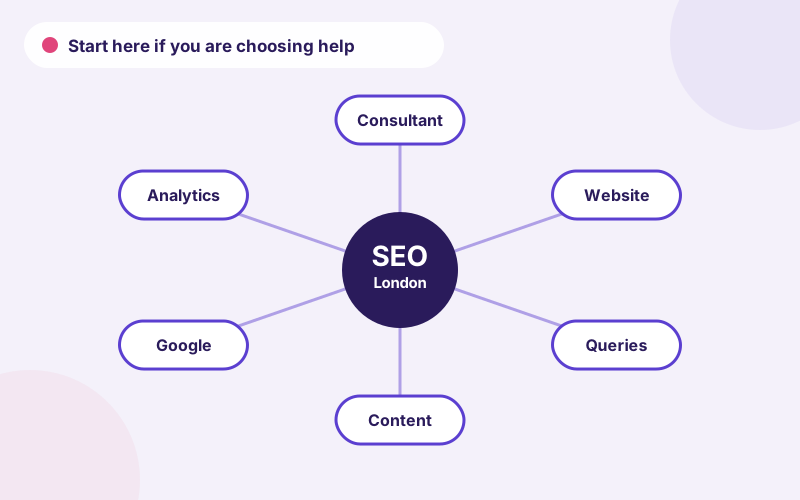
If you are deciding whether to hire an SEO consultant, begin with how to choose an SEO consultant in London, then read how much an SEO consultant costs and consultant vs agency vs in-house team. For realistic expectations, see how long SEO takes to show results. Together they cover selection, cost, model and timing.
Start here if something is broken
If pages are missing from Google, begin with crawling vs indexing and canonical tags. If traffic has fallen, use the organic traffic drop diagnostic guide, then manual actions vs ranking declines. If you are about to redesign, read the website migration SEO checklist before design work starts.
Start here if you want local customers
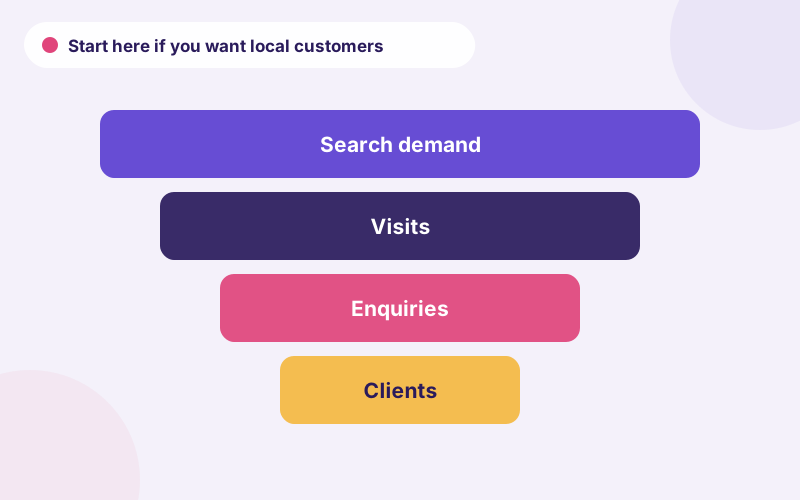
Local visibility depends on several connected parts. Use the local SEO checklist for London businesses as a map, then go deeper with Google Business Profile optimisation, local citations, Google reviews and local SEO and service area pages. When you want help applying them, see our local SEO consultant service.
Start here if you are planning content
Content works best when it is planned. Begin with keyword research and intent-to-URL mapping and search intent, then see how to organise the whole subject in how to create a topical map. When pages overlap or age, use keyword cannibalisation and refresh, merge or remove content. Our SEO content strategy service puts it into practice.
How we keep guides accurate
Search changes, so we review guides regularly and update them when guidance or tools change. We cite primary sources such as Google Search Central documentation where relevant, avoid invented statistics and label hypothetical examples clearly. If you notice something out of date or unclear, tell us through the contact page and we will review it.
SEO guides and checklists for small businesses and owners
This SEO knowledge hub is built as an SEO resource library, with SEO guides and checklists you can use without a background in marketing. An SEO guide for small businesses should be short and practical, and business owner SEO resources should respect your time. Our SEO learning resources for businesses are organised by problem, so you can find the right guide in a few clicks.
If you want practical SEO tutorials for businesses, start with the checklists, which turn explanations into tasks. For SEO help for business owners who prefer to delegate, the guides also show what a consultant should deliver, so you can judge any proposal. Use them as SEO advice for business owners who want to ask better questions, not as a substitute for professional help when the problem is complex.
How the guides connect to our services
Each guide links to the service that applies its ideas in practice. The audit and technical guides connect to our SEO audit and technical SEO services. The local guides connect to local SEO consulting. The content guides connect to SEO content strategy. The ecommerce guides connect to ecommerce SEO consulting, and the measurement guides connect to SEO reporting and analytics. Migration and recovery guides connect to migration consulting and traffic recovery.
This structure is deliberate. Reading a guide should help you decide whether you can handle a task yourself or whether to ask for help, and it should make the next step obvious in either case.
If you read several guides and still feel unsure where to start, the most efficient move is usually a short conversation about your goals, which you can start from the contact page.
Reading order for different roles
If you are a business owner, begin with the buying guides and the audit checklist. If you are a marketing manager, add the content and measurement guides. If you work with developers, read the technical group, especially crawling, canonical tags, redirects and Core Web Vitals. If you manage local branches, follow the local sequence. Each guide stands alone, so you can dip in and out, but the sequence gives the most complete picture.
When to move from reading to action
Guides can take you a long way, but some situations need an expert: a migration, a traffic drop, a technical diagnosis or a complete strategy. If you reach that point, an SEO audit is usually the most efficient first step, and our main SEO consultant London page explains how we can help. You can also see worked projects in the SEO projects portfolio.
Frequently asked questions
Which guide should I read first?
If you are unsure where to start, read the SEO audit checklist. It shows the main areas and helps you spot what to look at next.
Are these guides suitable for beginners?
Yes. They are written in plain English for business owners and marketers, with steps and examples.
How often are the guides updated?
We review them regularly and update them when guidance, tools or search features change.
Can I request a guide on a topic?
Yes. Send your suggestion through the contact page, and we will consider it.
Do I need an SEO consultant after reading?
Not necessarily. Many tasks can be done in-house. The guides show when specialist help saves time or reduces risk.
Talk to an SEO consultant
Questions about this topic or your own site? Send a few details and you will get a clear, practical reply.