Quick answer
- SEO content strategy matches the questions your customers search with the pages your site needs.
- We map topics and keywords to one URL each, which prevents overlap and keyword cannibalisation.
- Deliverables include a topical map, page briefs, an update-merge-remove plan and a publishing priority list.
- It is a planning service; writers, whether yours or ours, then produce content from the briefs.
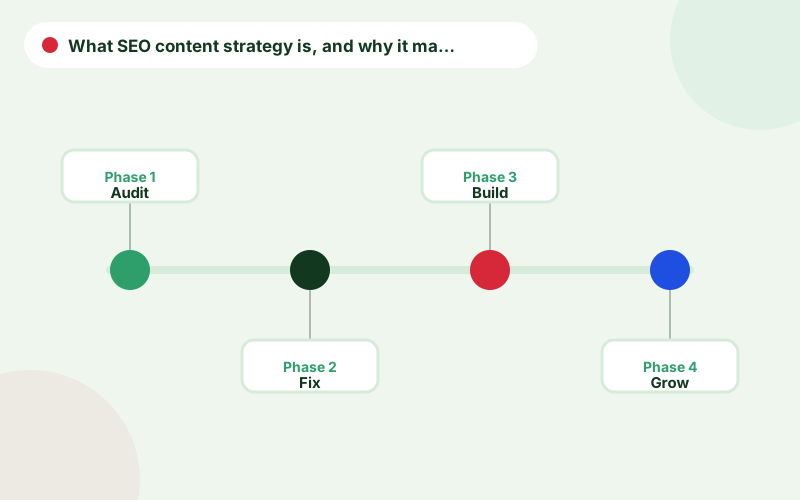
What SEO content strategy is, and why it matters
SEO content strategy is the discipline of deciding which pages a website needs, what each one must answer, and how they connect. It sits between keyword research and writing. Without it, businesses tend to publish whatever feels useful, end up with several pages competing for the same query, and leave genuine customer questions unanswered. A content SEO strategy replaces that drift with a plan tied to commercial priorities.
Search engines now judge pages on how completely and clearly they satisfy an intent, and AI answer systems prefer sources that cover a topic coherently. A deliberate content strategy for SEO makes your site that coherent source: each page has a job, the supporting pages reinforce it, and the whole structure signals expertise on your subject.
How we map topics to your business
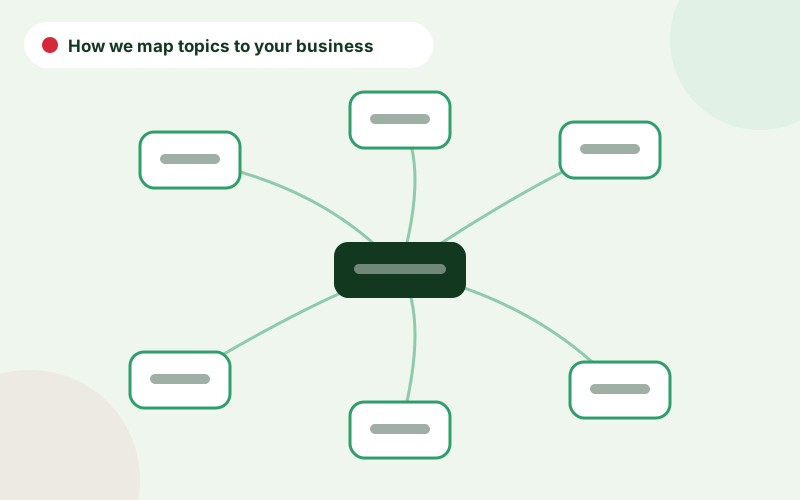
We begin with your offer rather than a keyword list. Which services earn the most margin? Which customers are easiest to win? What do they need to know before they enquire? From those answers we build a topical map: a structured inventory of the subjects, questions and comparisons that surround your services, grouped into clusters with a clear hub page for each.
Each topic is then assigned a single primary query and a small set of supporting phrases, so one URL owns one search task. Our guides on keyword research and intent-to-URL mapping and how to create a topical map for a service business describe the method in detail if you want to follow along or try it yourself.
Search intent decides the page type
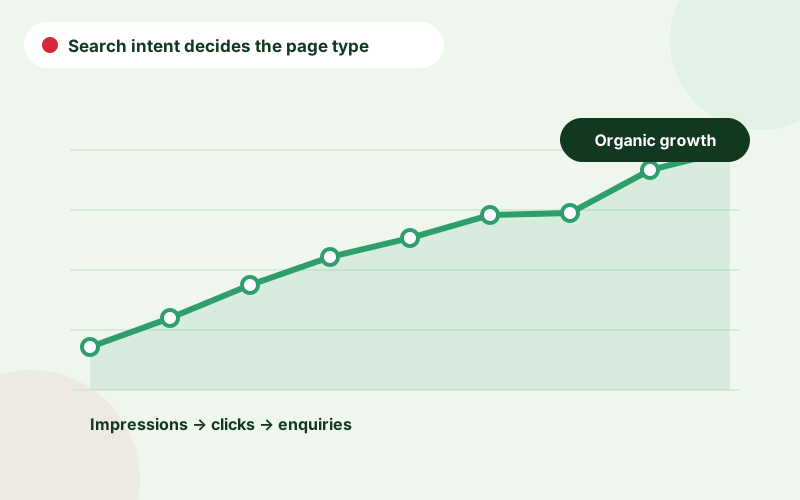
The same words can mean different things. Someone searching “seo content strategy” may want a definition, a template or a provider. We examine the live results to see what Google rewards and then specify the page type that fits: a service page, a guide, a comparison or a tool. Getting this wrong is the most common reason a well-written page never ranks. See search intent for service business content for how we judge it.
For service businesses in London we also check whether the query has local intent, because that changes layout, evidence and internal links.
Get a quote for SEO Content Strategy
Tell us about your site and goals. A senior SEO reads every enquiry and replies with next steps.
- Clear scope, written plainly
- Recommendations tied to enquiries and revenue
- No lock-in contract to get started
Briefs your writers can use
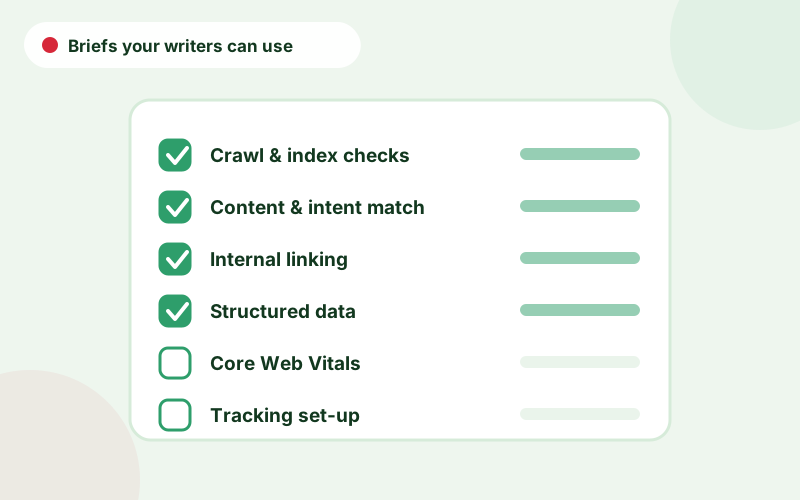
A good brief removes guesswork and protects quality. Each brief we produce includes the following.
- The primary query, supporting phrases and the search task the page must satisfy
- A recommended outline with headings written as the questions readers ask
- The entities, facts and examples that must appear, and the original evidence you can supply
- Internal links to include, with sensible anchor text
- Suggested title tag, meta description and structured data
- Notes on tone, length and what to avoid
Improving the content you already have
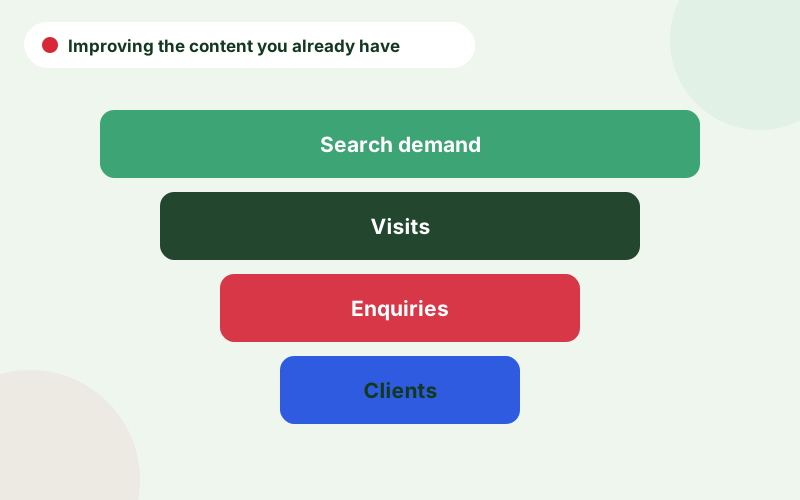
New pages are only half the opportunity. Existing content often holds more value, and an SEO and content strategy should decide what to refresh, merge or remove. We review each page against its queries, traffic and conversions, then recommend one of three actions: update it, consolidate it with a stronger page, or retire it with a redirect. Our guides on keyword cannibalisation and refreshing, merging or removing content explain the reasoning.
This is usually the fastest route to gains, because the pages already have history, links and indexed status that a new page would have to earn.
What the engagement looks like
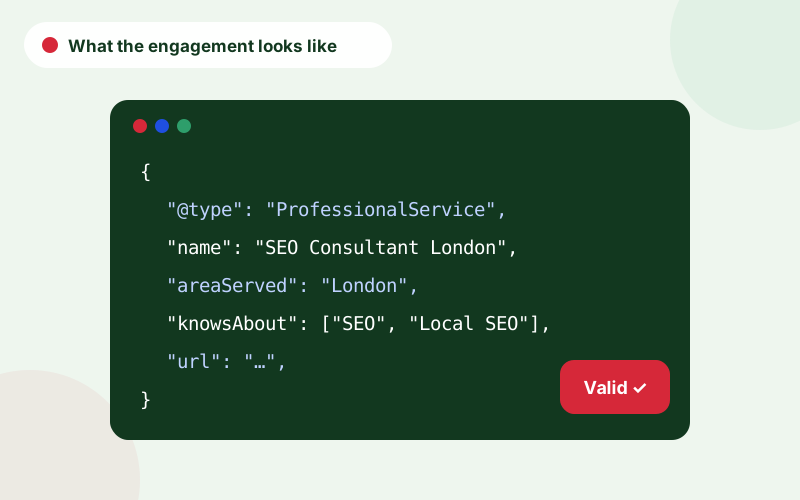
Most SEO content strategy engagements run four to eight weeks for the initial plan, followed by optional monthly support for briefing, editorial review and performance checks. B2B and SaaS clients often add specialist topic research with their subject experts; local service providers usually pair the plan with our local SEO consultant service. For the wider picture of how content fits into the full programme, see SEO strategy and roadmap consulting.
Content strategy and SEO for B2B and freelance-led teams
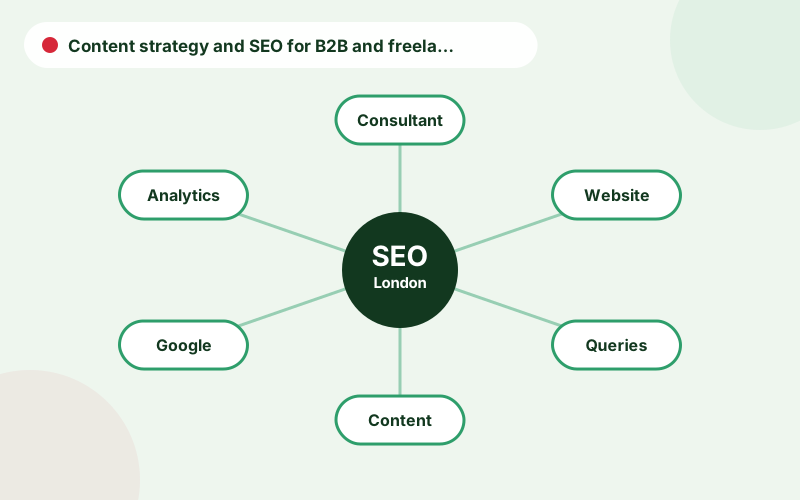
Many of the businesses we advise already work with writers. Some use a freelancer, others an agency. For them, content strategy and SEO is less about producing more words and more about giving the writers a clear target: which query, which intent, which evidence. We offer B2B SEO and content strategy consulting for teams who want that discipline, and an SEO content strategy freelancer-style arrangement for those who want lighter, project-based help.
Good SEO content strategies share a few habits. They keep one URL per search task, they plan updates alongside new pages, and they treat SEO content writing strategy as a loop: publish, measure, improve. Content strategy in SEO is never finished, which is why we build review points into every plan.
Who this service is for
This suits businesses that publish content but cannot tell what is working, teams with a freelance writer or agency who need clearer direction, and companies launching a new service line that need a plan before spending on copy. If your site has technical problems blocking indexation, we would start with an SEO audit first, because strategy cannot overcome a site that search engines cannot read.
Frequently asked questions
What does an SEO content strategy consultant do?
They research what your customers search for, decide which pages your site needs, assign each topic to one URL, write briefs, and plan how to improve existing content, all tied to commercial goals.
Do you write the content as well?
The strategy service produces plans and briefs. Content can be written by your team, a freelancer or our writers, using the briefs as the standard to meet.
How is a topical map different from a keyword list?
A keyword list is a set of phrases. A topical map organises topics, questions and entities into clusters and assigns each to a page, so the structure itself shows expertise.
How many pages will I need?
It depends on your offer and competition. We aim for the smallest set of pages that covers the topic completely, not the largest possible number.
Can you combine this with technical SEO?
Yes. Content strategy and technical SEO consulting work well together, and we sequence them so technical blockers are fixed before new content goes live.