Quick answer
- International SEO makes sure the correct country or language version of a page appears for each searcher.
- Key decisions are which markets to target, whether to use folders, subdomains or domains, and how to implement hreflang.
- Translation alone is not enough; search behaviour, terminology and competitors differ by market.
- We verify implementation with crawls, Search Console and market-by-market reporting.
What international SEO covers
International SEO is the practice of preparing a website to rank in several countries, languages or both. The challenge is rarely just translation. Search engines must understand which version of a page belongs to which audience, and users must find the right content, currency and delivery information. An international SEO consultant makes those signals consistent across technical set-up, content and local presence.
Our international SEO services cover market selection, site architecture, hreflang, localised content, and measurement. We advise English-language sites targeting several countries, such as the UK, Ireland and the US, as well as multilingual builds.
Choosing markets before choosing technology
Before touching code, we test whether each target market is worth the effort. We review search demand in each country, the strength of local competitors, your delivery or service capacity and the language effort required. Often the best first expansion is a nearby English-speaking market, which needs fewer content changes than a new language.
The output is a ranked market list with a rationale, so you invest first where the commercial case is strongest instead of translating the whole site everywhere at once.
URL structure: folders, subdomains or country domains
This decision is hard to reverse, so it deserves careful thought. The three common options compare as follows.
| Option | Example | Strengths | Watch-outs |
|---|---|---|---|
| Subfolders | example.com/de/ | Shared authority, simple to manage | One server location; needs clear hreflang |
| Subdomains | de.example.com | Easy to host separately | Treated more separately; authority is split |
| Country domains | example.de | Strongest local signal | Costly; every domain builds authority separately |
Get a quote for International SEO Consultant
Tell us about your site and goals. A senior SEO reads every enquiry and replies with next steps.
- Clear scope, written plainly
- Recommendations tied to enquiries and revenue
- No lock-in contract to get started
Hreflang implementation and verification
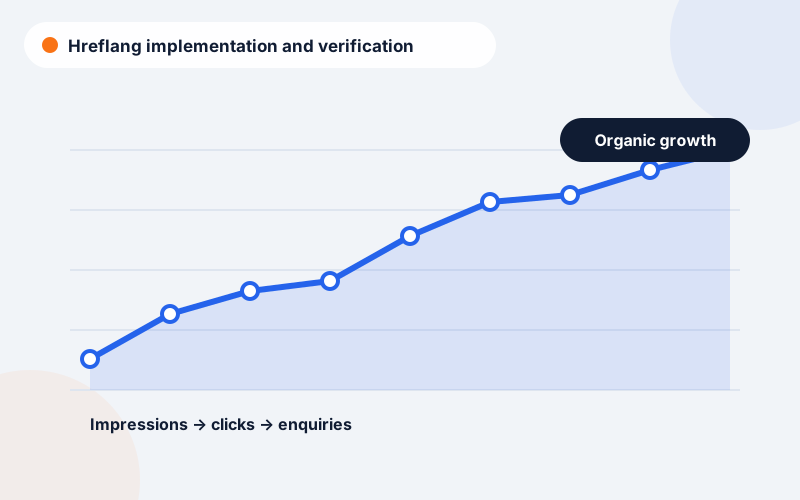
Hreflang annotations tell Google which language and region each page targets, and which pages are equivalents. Mistakes are common: missing return links, wrong language codes, or pointing to redirected URLs. We specify the annotation method that suits your platform, whether in HTML, headers or sitemaps, and validate it at scale.
We then confirm in Google Search Console that the intended version appears in each market, and watch for cases where the wrong country page wins impressions.
Localising content properly
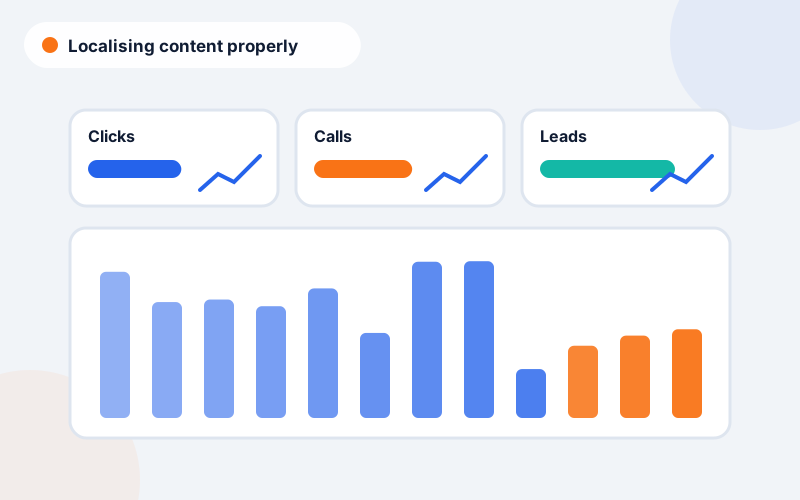
People search differently by country. “Trainers”, “sneakers” and “athletic shoes” can all describe the same product. We research local terminology, units, regulations, payment methods and trust signals, and produce briefs so translators and local writers create content that matches real queries. Machine translation can be a starting draft, but it should be reviewed by a native speaker before publishing.
Where it makes sense we also adjust structured data, currencies and delivery details per market, supported by our structured data guide.
Measurement across markets
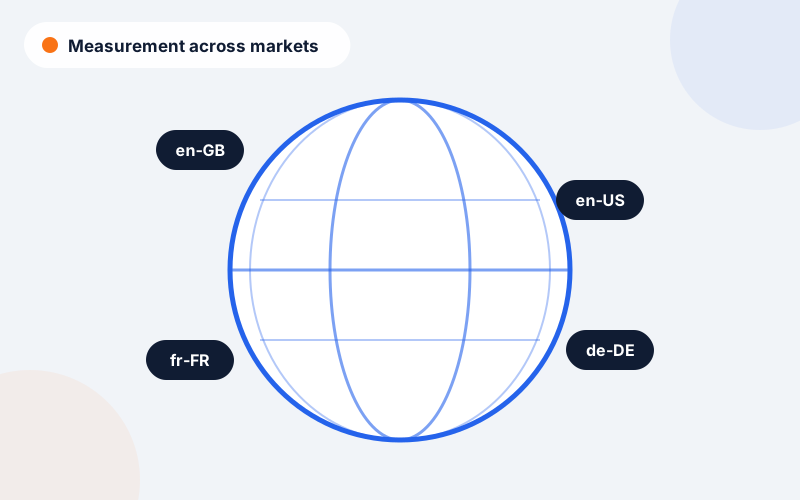
Reporting by country and language shows whether each market is working and where to invest next. We set up Search Console properties, GA4 segments and dashboards so you can compare visibility, traffic and conversions market by market. For the wider approach see SEO reporting and analytics consulting.
Working with international SEO consultants and experts
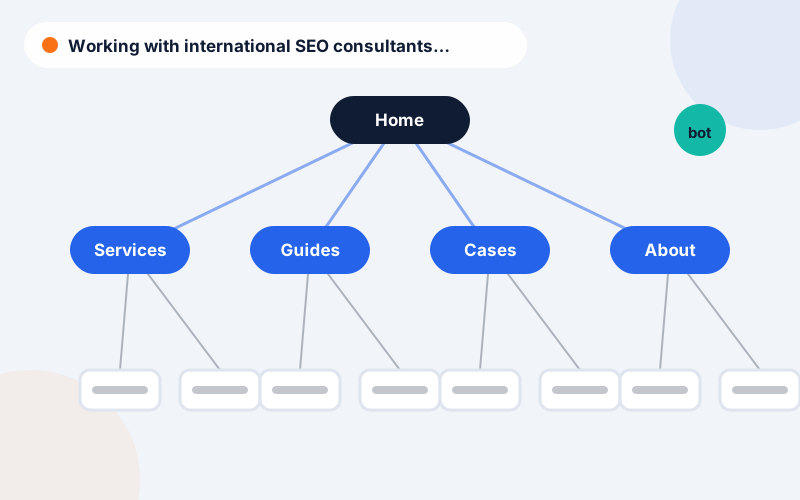
Choosing among international SEO consultants is easier when you ask about real multi-market experience. An international SEO expert or international SEO specialist should be able to explain hreflang, localisation and market selection without hiding behind jargon. International SEO experts also need to work with your developers, your translators and your local sales teams, since the work crosses all three.
As an international SEO consultancy offering international SEO consulting and an international SEO consulting service, we begin with a short diagnostic, then agree a plan that matches the number of markets you are entering. Our international SEO services are most useful before translation starts, when the choice of structure is still free, though we also repair existing set-ups.
Common international SEO mistakes
Typical mistakes include redirecting visitors automatically by IP address, which can stop Google reaching other versions, publishing machine-translated pages without review, and mixing hreflang with conflicting canonical tags. Another is launching in many countries at once with no local content or support. A phased plan, starting with the markets that have the strongest case, reduces cost and makes problems easier to isolate.
Working with an international SEO specialist
We usually start with a market and architecture review, then support implementation with your developers and local teams. If you are also changing platforms, our SEO migration consultant work protects existing rankings during the move. As an international SEO consultancy based in London, we work across time zones and with distributed teams. Costs are explained on our pricing page, and the broader SEO consultant London service is the best starting point if you are unsure where to begin.
Frequently asked questions
What does an international SEO consultant do?
They plan and implement the technical, content and measurement set-up that lets a website rank in multiple countries or languages without duplication or wrong-version results.
Do I need hreflang for an English site targeting several countries?
Usually yes, if you have separate pages for different English-speaking markets with similar content. Hreflang helps Google show the right regional version.
Is a subfolder or a country domain better?
Subfolders suit most businesses because authority is shared and management is simpler. Country domains give a stronger local signal but cost more to build and maintain.
Can machine translation be used?
It can speed up drafts, but quality, terminology and intent should be reviewed by a native speaker before publishing.
How do I know the right country page is shown?
We check Search Console performance by country, run international crawls and test searches from target locations to confirm the correct version appears.