Quick answer
- SEO ROI equals (value generated minus cost) divided by cost, measured over a defined period.
- Include all costs: consulting, content, development and tools, not just the monthly fee.
- Value leads using close rate and average customer value, and state the assumptions.
- SEO value builds over time, so measure over months and show ranges, not false precision.
What SEO ROI means
Business owners ask whether SEO is worth the money. To measure SEO ROI you compare the value that organic search generated with the total cost of generating it. Unlike advertising, SEO spend creates assets, such as pages, authority and fixes, that keep producing after the work is done, which makes simple month-by-month comparisons understate the return.
The calculation is straightforward in principle. The challenge is gathering honest inputs for value and cost, and agreeing the period over which to judge.

The SEO ROI formula
The standard formula is:
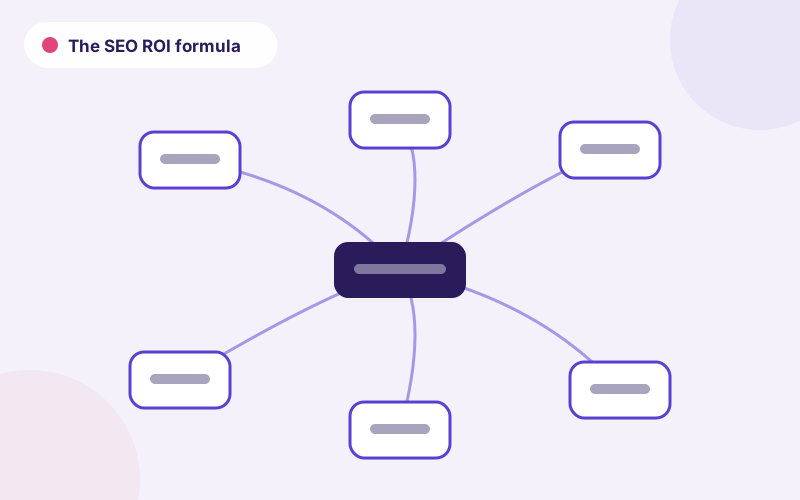
- SEO ROI (%) = (Value generated − Total SEO cost) ÷ Total SEO cost × 100
- Value generated = organic leads × lead-to-customer rate × average customer value (use gross margin for a more prudent figure)
- Total SEO cost = consulting fees + content + development time + tools + other direct costs
A worked example with hypothetical numbers
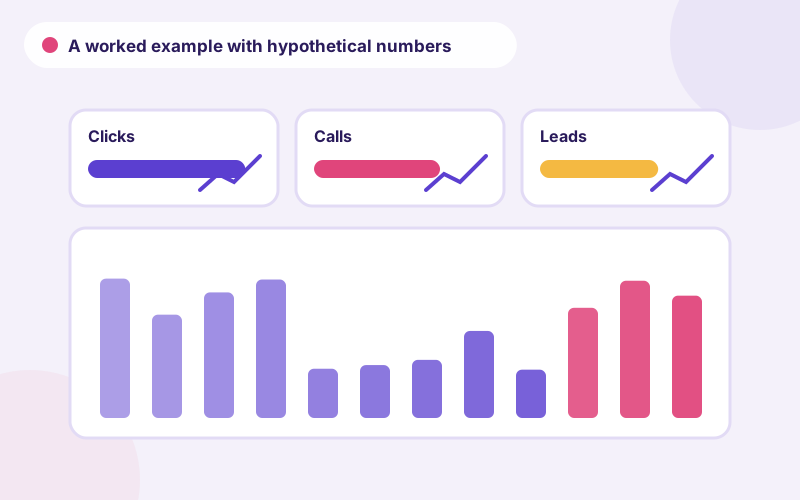
The numbers below are illustrative only, to show the method. They are not a forecast or a claim about any client.
| Input | Hypothetical value |
|---|---|
| Qualified organic leads over 6 months | 60 |
| Lead-to-customer close rate | 20% |
| Customers won | 12 |
| Average gross margin per customer | £1,500 |
| Value generated | £18,000 |
| Total SEO cost over 6 months | £12,000 |
| SEO ROI | (18,000 − 12,000) ÷ 12,000 = 50% |
How to value a lead
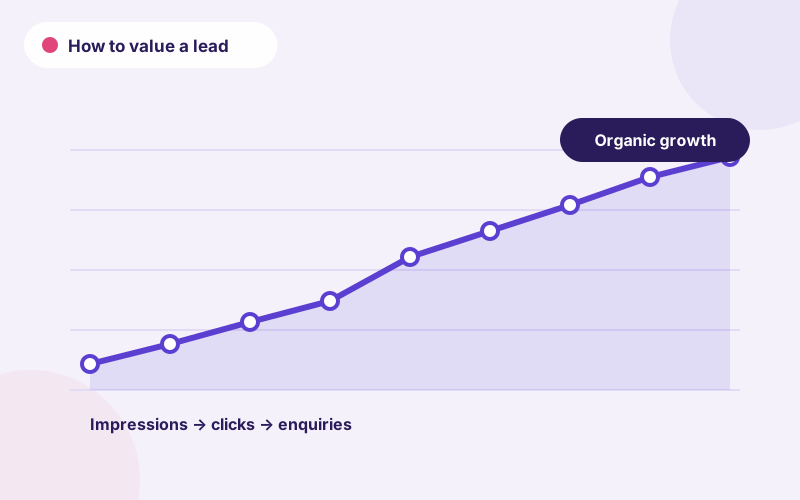
Lead value comes from your own sales data: the proportion of enquiries that become customers and the average margin or revenue per customer. If you do not have history, start with a cautious estimate and refine it. Be careful to separate qualified leads from raw form submissions, as explained in measuring organic leads in GA4. Valuing leads conservatively makes the result more credible with financial colleagues.
Costs people forget
A full cost view prevents flattering numbers.
- Content writing, editing and design
- Developer time to implement fixes
- Tool subscriptions and analytics set-up
- Internal staff time spent on briefing, review and approvals
- Digital PR or outreach costs

Reporting SEO to business owners
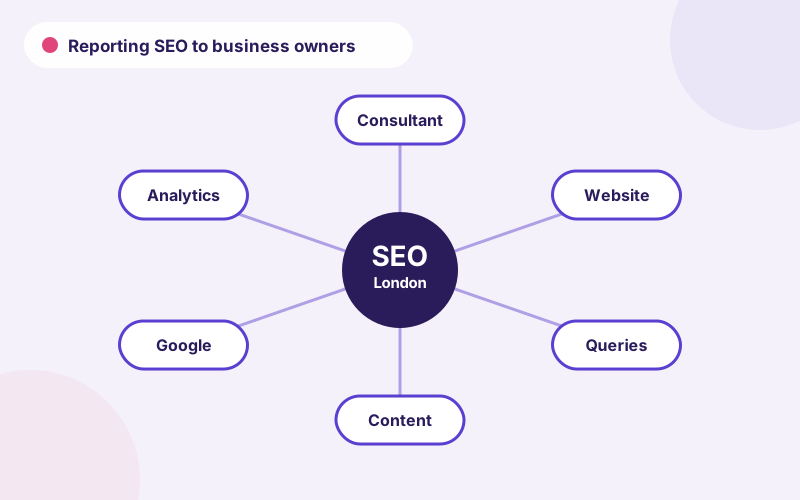
An effective report shows outcomes first: leads, revenue where tracked, and trends against targets. It explains what changed and why, lists work completed and says what comes next. Rankings and traffic are supporting evidence. Include a note on attribution limits, because phone calls, branded searches and multi-device journeys are partially invisible. Dashboard practice is described in SEO reporting and analytics consulting.
Time horizons, uncertainty and decision-making
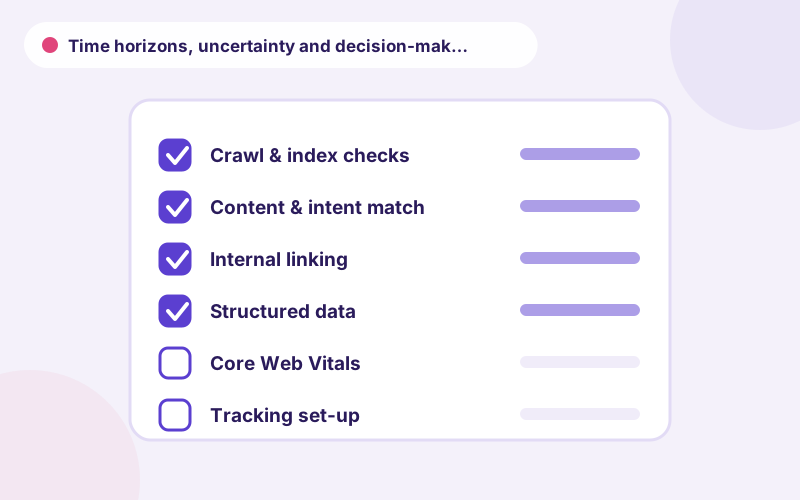
Judge SEO over several months, not weeks, and compare against a baseline. Present ranges, for example conservative and optimistic cases, and update them as data arrives. Use ROI to decide where to invest next: which pages, services or locations return most per pound spent. Timing expectations are covered in how long SEO takes to show results, and costs in how much an SEO consultant costs.
SEO lead value, KPI dashboard and revenue attribution
SEO lead value is the expected revenue or margin from an average lead, and it is the key input to any ROI estimate. An SEO KPI dashboard should show outcomes first and rankings second. SEO business reporting for owners should be short, with SEO reporting metrics limited to those that drive decisions: leads, revenue, conversion rate, visibility and risk.
SEO investment measurement works best over a stated period with a stated baseline. SEO revenue attribution is imperfect, so show a range, explain the method and flag what you cannot see, such as calls without tracking. Honest uncertainty makes the whole report more credible.
Common ROI reporting mistakes
Reports often overstate return by counting every lead as a sale, using revenue instead of margin, ignoring internal time or comparing periods that are not like for like. They can also understate it by ignoring assisted conversions and brand effects. The solution is to state assumptions plainly, show a range, and review the model with finance or sales colleagues who know the real numbers.
Treat the first model as a draft. As more data arrives, update the close rate and lead value, and your ROI estimate will become steadily more reliable.
Presenting ROI to a finance director
Finance colleagues will ask about assumptions, so prepare them. Show the formula, the inputs and their sources, and offer a conservative and an optimistic case. Explain how long it takes for results to build and which costs are one-off versus ongoing. Offer to review the model quarterly with actual figures. This collaborative approach turns the conversation from defending a budget into planning an investment together.
Using ROI to plan your SEO budget
Work backwards from a target: how many extra customers would justify the planned spend, and what that requires in leads and visibility. Our SEO consulting pricing page explains how we scope work against goals, and the SEO strategy and roadmap service turns that into a prioritised plan. For the main overview see SEO consultant London.
Frequently asked questions
How do you calculate SEO ROI?
Subtract total SEO cost from the value generated, divide by the cost and multiply by 100. Value comes from leads, close rate and customer value.
How long before SEO shows a positive ROI?
It varies. Many businesses need several months to build momentum, so measure over a period long enough to cover investment and results.
Should I use revenue or profit to calculate ROI?
Gross margin gives a more prudent and decision-useful figure than revenue.
What if I cannot track every lead?
State the limits and report ranges. Combine analytics, call tracking and sales feedback to estimate organic contribution.
Are rankings a measure of ROI?
No. Rankings are diagnostic indicators. ROI is measured in leads, revenue and profit.
Talk to an SEO consultant
Questions about this topic or your own site? Send a few details and you will get a clear, practical reply.
Related pages
- SEO Reporting and Analytics ConsultingAn SEO reporting consultant to set up GA4, Search Console and dashboards that tie organic tr…
- SEO Guides for Business OwnersPractical SEO guides for business owners: audits, technical SEO, local SEO, content, ecommer…
- Measure Organic Leads in GA4How to measure organic leads in GA4: set key events for forms and calls, separate genuine le…