Quick answer
- Group related pages into clusters with a clear hub page for each topic.
- Keep important pages within a few clicks of the homepage and avoid orphan pages.
- Use descriptive anchor text and place links where they help the reader’s next step.
- Audit internal links regularly to find broken, redirected and missing links.
Why architecture and internal links matter
Search engines discover pages by following links, and they use link patterns to judge which pages are important and how topics relate. Users depend on the same structure to find answers. A clear site structure for SEO therefore does two jobs: it makes content easy to reach and it communicates what the site is about.
Internal links are the part you fully control. Unlike backlinks, you can improve them immediately, which makes them one of the most efficient SEO levers for business websites.
Hub-and-spoke structure for service businesses
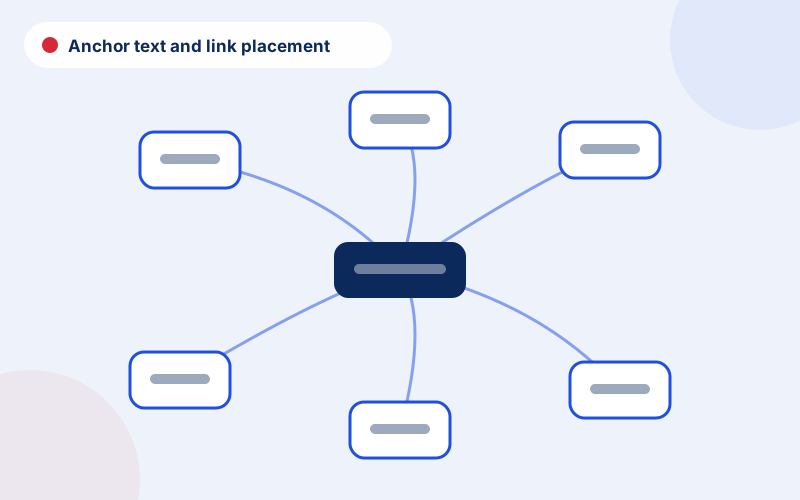
A reliable pattern is to organise content into clusters. A hub page covers the main service, such as local SEO, and links to supporting pages that cover specific questions, such as checklists, citations and reviews. Each supporting page links back to the hub and to relevant siblings. This builds topical depth and routes authority to the pages that sell.
Our own site follows this model: service pages sit at the core, and guides sit around them. Planning clusters is part of SEO content strategy and the method described in how to create a topical map for a service business.
URL structure and click depth
Use short, readable URLs that reflect the hierarchy, such as /services/local-seo/. Keep key pages within three clicks of the homepage and link to them from navigation, footers and relevant content. Pages that have no internal links pointing to them, called orphan pages, are hard for crawlers to find and are unlikely to rank.
Avoid changing URLs without redirects, and keep navigation consistent across the site so users and bots learn the structure.
Anchor text and link placement
Good internal links are useful to the reader first.
- Use descriptive anchor text that tells users what they will find
- Vary wording naturally; do not repeat exact-match phrases mechanically
- Place links inside relevant body copy where they answer the next question
- Link from high-authority pages to important commercial pages
- Avoid generic anchors such as click here
- Do not overload a page with dozens of links
How to run an internal link audit
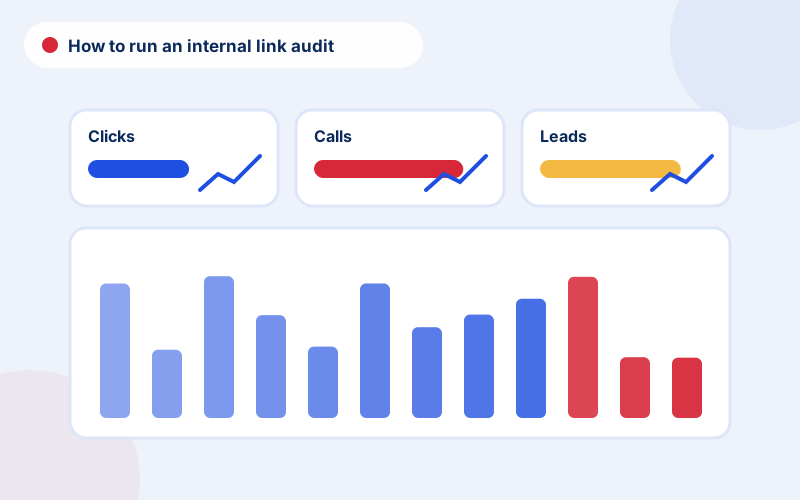
An internal linking audit starts with a crawl. Identify orphan pages, pages with few incoming links, broken links, redirected links and deep pages. Then compare the pages receiving most internal links with the ones that matter commercially; they should match. Combine this with Search Console data to find pages that have impressions but weak internal support.
Prioritise fixes that add links from strong, relevant pages to important targets, and update links that point to redirects so they use the final URL.
Navigation, breadcrumbs and contextual bridges
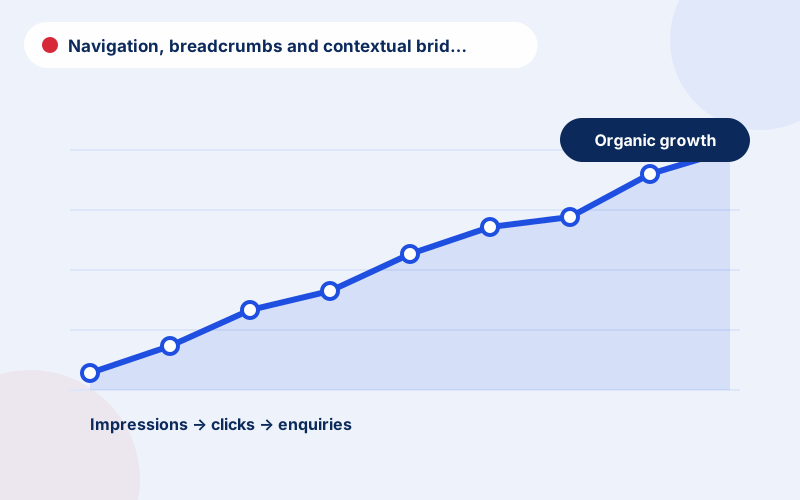
Main navigation should reflect priorities, not list every page. Breadcrumbs reinforce hierarchy and can appear in search results when marked up with structured data, as in our structured data guide. Contextual links, placed where a reader’s question naturally leads to a service, are the most valuable. For example, a guide on crawling issues should link to technical SEO consulting at the point where implementation help makes sense.
Internal linking best practices for SEO
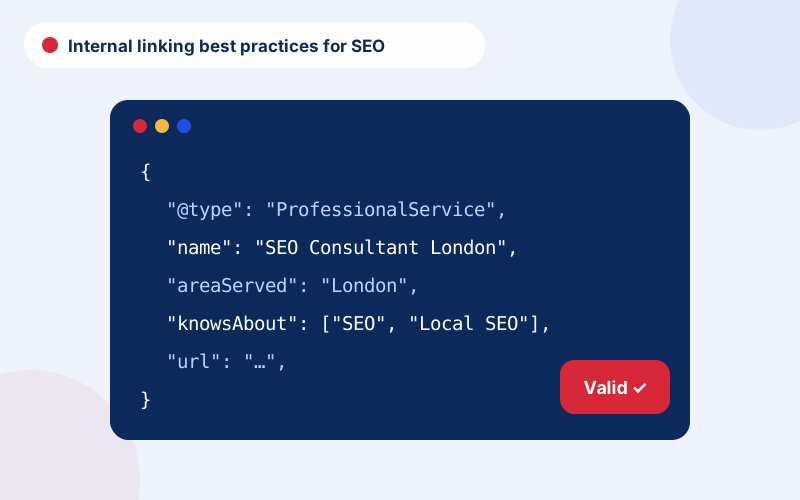
Good internal linking SEO is about clarity, not quantity. Internal links SEO benefits come when each link has a reason: it helps the reader move to a relevant next step. A few internal linking best practices are worth repeating. Link from strong pages to important pages, use descriptive wording, avoid hiding links in menus that crawlers struggle with, and keep the number of links on a page reasonable.
Internal linking for SEO also covers how you use anchor text. Anchor text internal links SEO guidance is to vary wording naturally, avoid exact-match repetition and make the destination obvious. Website architecture SEO and SEO site structure decisions, such as category depth and navigation, set the framework within which these links operate. A clean framework makes every individual link more effective.
A simple internal link audit routine
Export your crawl data and sort pages by number of inbound internal links. Check that revenue pages sit near the top. Look for orphan pages and add links from relevant content. Update links to redirected URLs. Repeat quarterly. These small steps often outperform larger projects in cost-effectiveness.
Common internal linking mistakes
Typical mistakes include linking only from the navigation, leaving important pages several clicks deep, relying on generic anchors such as “read more”, and linking to pages that redirect. Another is creating hundreds of links to the same page in the footer, which adds little. Fix these with a short review: identify your top commercial pages, count the relevant links they receive and add contextual links from related content where a reader would naturally need them.
Keeping the structure healthy
Review architecture whenever you add sections, run migrations or merge content. Our SEO audit includes a full structure review, and the SEO audit checklist lists the checks you can run yourself. For a wider view of the approach, see SEO consultant London.
Frequently asked questions
What is an internal linking strategy?
It is a plan for how pages link to each other so users can find related content and search engines understand priorities and topic relationships.
How many internal links should a page have?
There is no fixed number. Include as many as help the reader, focused on relevance and clarity.
What is an orphan page?
An orphan page has no internal links pointing to it, which makes it difficult to discover and unlikely to rank.
Does anchor text matter for internal links?
Yes. Descriptive anchors help users and search engines understand the destination, but avoid unnatural repetition.
How often should I audit internal links?
At least annually, and after large content changes, migrations or redesigns.
Talk to an SEO consultant
Questions about this topic or your own site? Send a few details and you will get a clear, practical reply.