Quick answer
- Search intent describes what the searcher wants to achieve, not just the words they type.
- The main types are informational, commercial investigation, transactional, navigational and local.
- Google’s results reveal the expected page type; study them before writing.
- Service pages and guides need different formats because they satisfy different intents.
What is search intent?
Search intent SEO is about understanding why someone searches. Two queries with similar words can have different aims. “SEO audit” might come from someone who wants a definition, a template or a provider. Search engines try to infer the most likely goal and rank pages that satisfy it, so content that ignores intent struggles even if it is well written.
For service businesses this matters because the wrong page type, such as a long guide for a query where users want to hire someone, wastes your best content.
Types of search intent with examples
Most queries fall into a few categories.
| Type | Searcher goal | Example query | Best page format |
|---|---|---|---|
| Informational | Learn or understand | what is search intent | Guide or explainer |
| Commercial investigation | Compare options | seo consultant vs agency | Comparison or review |
| Transactional | Hire or buy | seo audit services london | Service page with clear call to action |
| Navigational | Reach a known site | brand name login | Brand or account page |
| Local | Find nearby providers | local seo consultant near me | Local page and Business Profile |
Informational and commercial intent for service businesses
Informational search intent covers questions and how-to queries. Guides answer these directly, build trust and lead readers to services. Commercial intent sits between learning and buying: people compare providers, costs and methods. Pages such as SEO consultant vs agency vs in-house team or how to choose an SEO consultant serve this stage by offering balanced criteria while pointing to relevant services.
Transactional and local intent
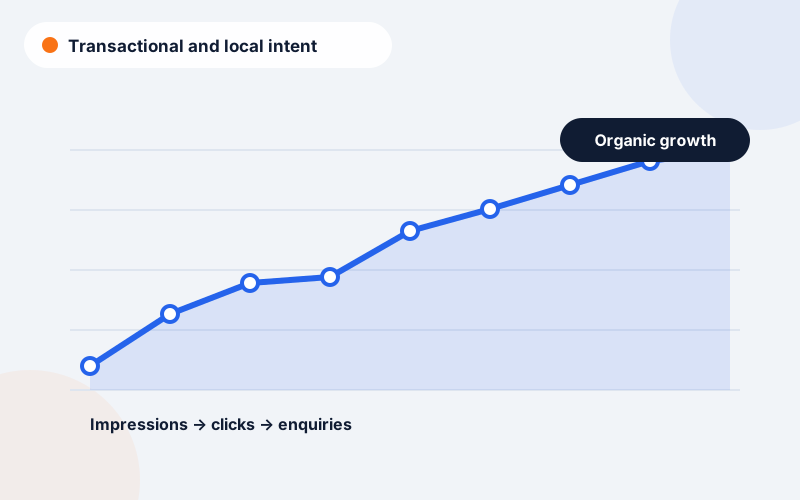
Transactional searches signal readiness to act, such as “hire”, “services”, “quote” or “near me”. Pages must make the next step obvious: clear scope, proof, pricing guidance and a prominent form or contact method. Local intent adds geography, and Google often shows a map pack. For these queries your Google Business Profile and local landing pages matter, as covered in local SEO consulting.
How to identify intent from the results
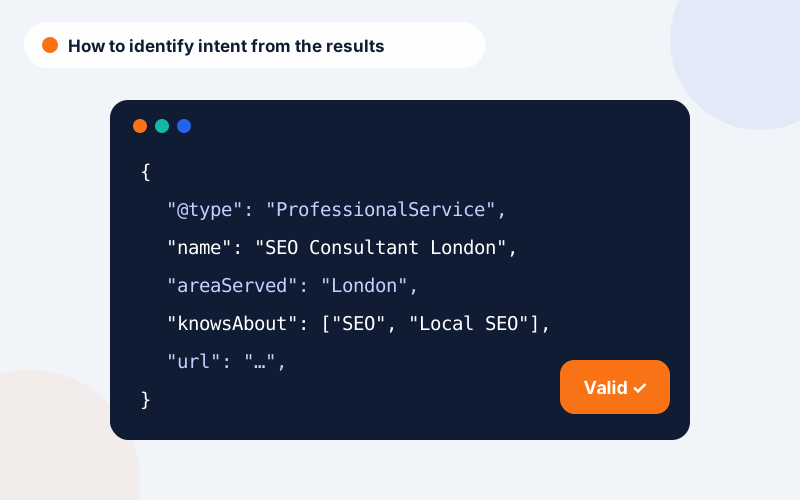
The live search results show what Google believes users want.
- Search the query in an incognito window from the target location.
- Note the page types that rank: service pages, guides, tools, videos or listings.
- Check features such as maps, shopping results and AI overviews.
- Read the top pages to see what questions they answer and in what order.
- Decide whether your page can credibly satisfy the same intent.
Matching content format to intent
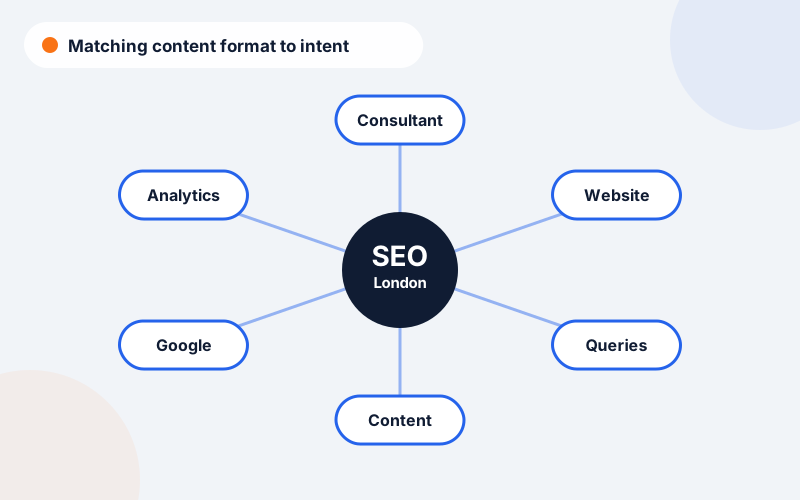
Once intent is clear, design the page accordingly. For informational queries, give a direct answer first, then supporting detail, steps and examples. For commercial queries, offer structured comparison and criteria. For transactional queries, lead with what you do, who it is for, how it works and how to start. Avoid mixing intents on one page, since it dilutes focus and invites cannibalisation, as discussed in keyword cannibalisation.
Keyword search intent: examples by type
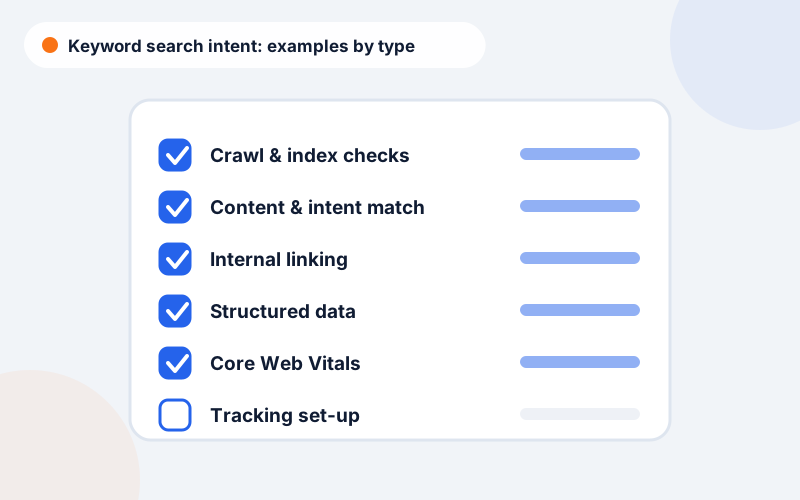
Keyword search intent can be read from modifiers. Search intent examples include “how to” and “what is” for informational, “best” and “vs” for commercial investigation, “hire”, “buy” and “price” for transactional, brand names for navigational and “near me” for local. Informational search intent is best served by guides, while transactional search intent needs service pages with clear calls to action.
Commercial search intent sits between: users want to compare, so give them criteria and honest trade-offs. Navigational search intent is mostly about brand pages. Local search intent adds geography and often triggers map results, so your profile matters as much as your page.
What changes when intent changes
A change of intent should change the page. If you notice that a query that used to return guides now returns service pages, your guide is unlikely to keep its position, and you may need a new page type. Review the results for your key queries every few months.
Common intent mistakes in service business content
Typical mistakes include writing a long guide for a query where people want to hire someone, putting a hard sales pitch on an informational page and ignoring local intent for searches that clearly want nearby providers. Another is targeting “best” queries with a page that only describes your own service. Match format to what the results show, and use internal links to connect informational pages with service pages at the right moment.
If you are unsure, test: look at the first page of results, count the page types and ask which one your page most resembles. If it resembles none, reconsider the target.
Using intent in your content plan
Add an intent column to your keyword map, described in keyword research and intent-to-URL mapping, and use it to decide the page type for each cluster. This is central to our SEO content strategy service. Review intent periodically, since search results change. For our full range of services, see SEO consultant London.
Frequently asked questions
What are the four types of search intent?
Informational, navigational, commercial investigation and transactional are the classic four. Local intent is often treated as a distinct category for service businesses.
How do I find the search intent of a keyword?
Study the search results: the page types, features and questions answered show what Google thinks users want.
Can one page serve multiple intents?
Rarely well. It is usually better to create separate pages for distinct intents and link them.
Does search intent change over time?
Yes. Results and features change, so review the intent of important queries periodically.
Why is my well-written page not ranking?
A common reason is intent mismatch. The page may be the wrong type or answer a different question than the one searchers have.
Talk to an SEO consultant
Questions about this topic or your own site? Send a few details and you will get a clear, practical reply.