Quick answer
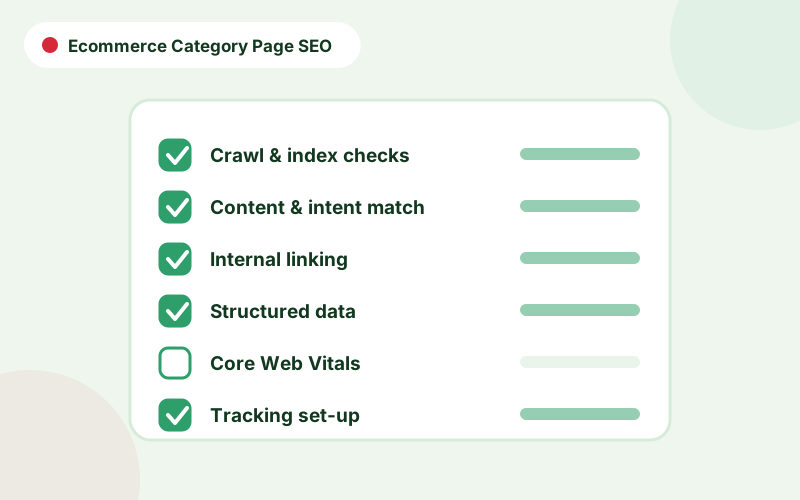
- Category pages target generic product searches and usually carry the highest revenue potential.
- Design the hierarchy around how shoppers think, and give each category one clear keyword focus.
- Add useful text, buying guidance and links without pushing products below the fold.
- Control filters, pagination and duplicates so crawl effort goes to valuable URLs.
Why category pages matter most
Shoppers often begin with a broad query such as “wireless headphones”, not a specific model. Category and collection pages are designed to answer that query by listing and comparing products. They attract more search demand than individual products, convert well because users can compare, and pass authority to the products they list. Ecommerce category page SEO therefore tends to produce the largest gains for a store.
The challenge is competition. Category queries are contested by large retailers, so winning needs clear relevance, good structure and a better shopping experience.
Designing the category hierarchy
A good ecommerce category hierarchy reflects how customers think, not how stock is organised internally. Aim for a shallow structure, ideally three levels such as department, category and subcategory, with each level targeting a distinct query. Avoid creating categories only to hold a handful of products, and avoid multiple categories that target the same task, which leads to cannibalisation, as explained in keyword cannibalisation.
Use clean URLs that reflect the hierarchy, and link parents and children to each other so authority and navigation flow naturally.
Keyword research and targeting for categories
Category page keyword research starts with the product types customers search for, including synonyms and regional spelling, such as “trainers” or “sneakers”. Assign one primary keyword to each category and use the live results to confirm the page type, since users usually expect product listings rather than long articles. Record the mapping in your keyword map, following keyword research and intent-to-URL mapping.
On-page elements: titles, headings and copy
Optimise the elements that influence relevance and clicks.
- Title tags that lead with the category term and add a differentiator such as range or delivery
- A single H1 matching the category name
- Short intro text above the product grid that helps shoppers
- Longer buying guidance below the grid, written for people and not stuffed with keywords
- Descriptive image alt text on product images
- Structured data for breadcrumbs and, where suitable, product lists
Writing ecommerce category descriptions that help
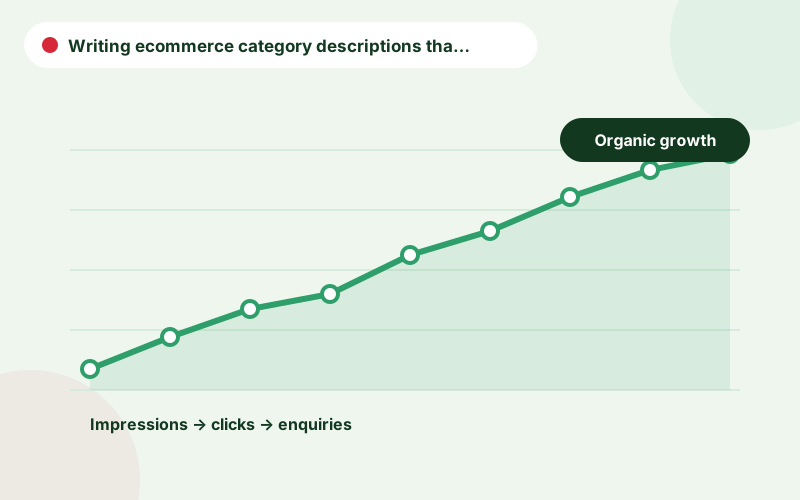
Ecommerce category descriptions should answer the questions a shopper has: how to choose, what the differences are, which brands or sizes suit which needs, and what delivery and returns look like. Keep the top copy brief so products remain visible, and place deeper guidance lower on the page with links to relevant subcategories and buying guides. Original text matters; avoid manufacturer copy and boilerplate repeated across categories.
Internal linking, filters and pagination
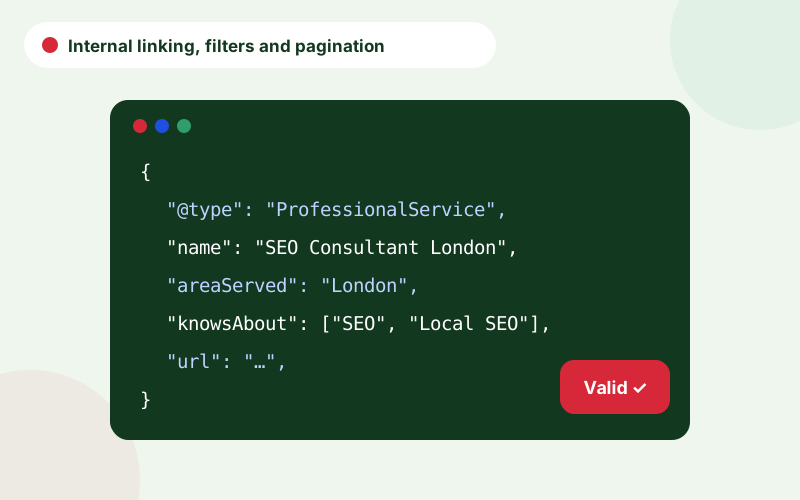
Link to subcategories and related categories with descriptive anchors, and feature popular products near the top. Filters can create huge numbers of duplicate URLs, so decide which filtered pages deserve indexing and control the rest, as explained in faceted navigation and filter indexing. For paginated categories, make sure each page is crawlable with self-referencing canonicals and that products are reachable through standard links, not only infinite scroll.
Category page optimisation and collection page SEO
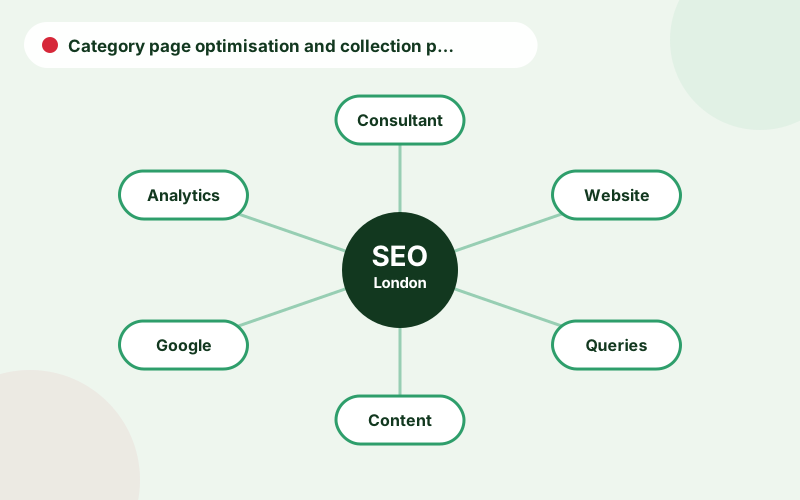
Category page optimisation and ecommerce category page optimisation describe the same work as collection page SEO on platforms such as Shopify. SEO for collection pages follows the same logic: clear hierarchy, unique content, helpful filters and strong internal links. Category page content should help a shopper decide, not repeat product titles, and category page title tags should lead with the product type shoppers use.
Category page internal linking matters because categories distribute authority. Link to subcategories, related categories and best sellers, and link back up to parents through breadcrumbs. Review these links whenever you add or remove ranges, since stale links to discontinued ranges waste crawl effort.
Common category page mistakes
Typical problems include very thin pages with only a product grid, large blocks of keyword-stuffed text, categories that overlap, filters that create duplicates and pagination that hides products. Another is ignoring page speed because product images are heavy. Fix them by writing helpful short copy, merging overlapping categories, controlling filters and compressing images, then measure the effect category by category.
It is also worth reviewing seasonal categories: keep them live year round where possible so they retain authority, and update them before the season starts.
A worked example of improving one category
Imagine a store selling garden furniture with a category called “Sets”. The page has a grid of products and one line of text. A better version is renamed “Garden furniture sets”, adds a short intro explaining sizes and materials, links to sub-categories such as two-seater and six-seater sets, and includes a buying guide below the grid with answers to common questions. After a few weeks, we would compare impressions, clicks and revenue for the category with the previous period, and keep refining the content.
Measuring category performance
Track impressions, clicks, average position, conversion rate and revenue per category. Compare against competitors, and prioritise improvements for categories with high demand but weak visibility. Product-level work then builds on this foundation, as described in product page SEO. For hands-on support, see our ecommerce SEO consultant service or the wider SEO consultant London overview.
Frequently asked questions
What is ecommerce category page SEO?
It is the optimisation of category or collection pages so they rank for broad product searches and convert shoppers, covering hierarchy, keywords, copy, links and technical handling.
How much text should a category page have?
Enough to help shoppers choose. A short intro above the products and fuller guidance below the grid is a common and effective pattern.
Should categories target the same keyword as products?
No. Categories target broad product-type queries, while products target specific model or variant searches.
How deep should the category hierarchy be?
Aim for a shallow structure with a few levels, ensuring each level targets a distinct search task.
How do I stop filters creating duplicate pages?
Decide which filter combinations have demand and make those indexable, and use canonicals, robots rules or noindex for the rest.
Talk to an SEO consultant
Questions about this topic or your own site? Send a few details and you will get a clear, practical reply.